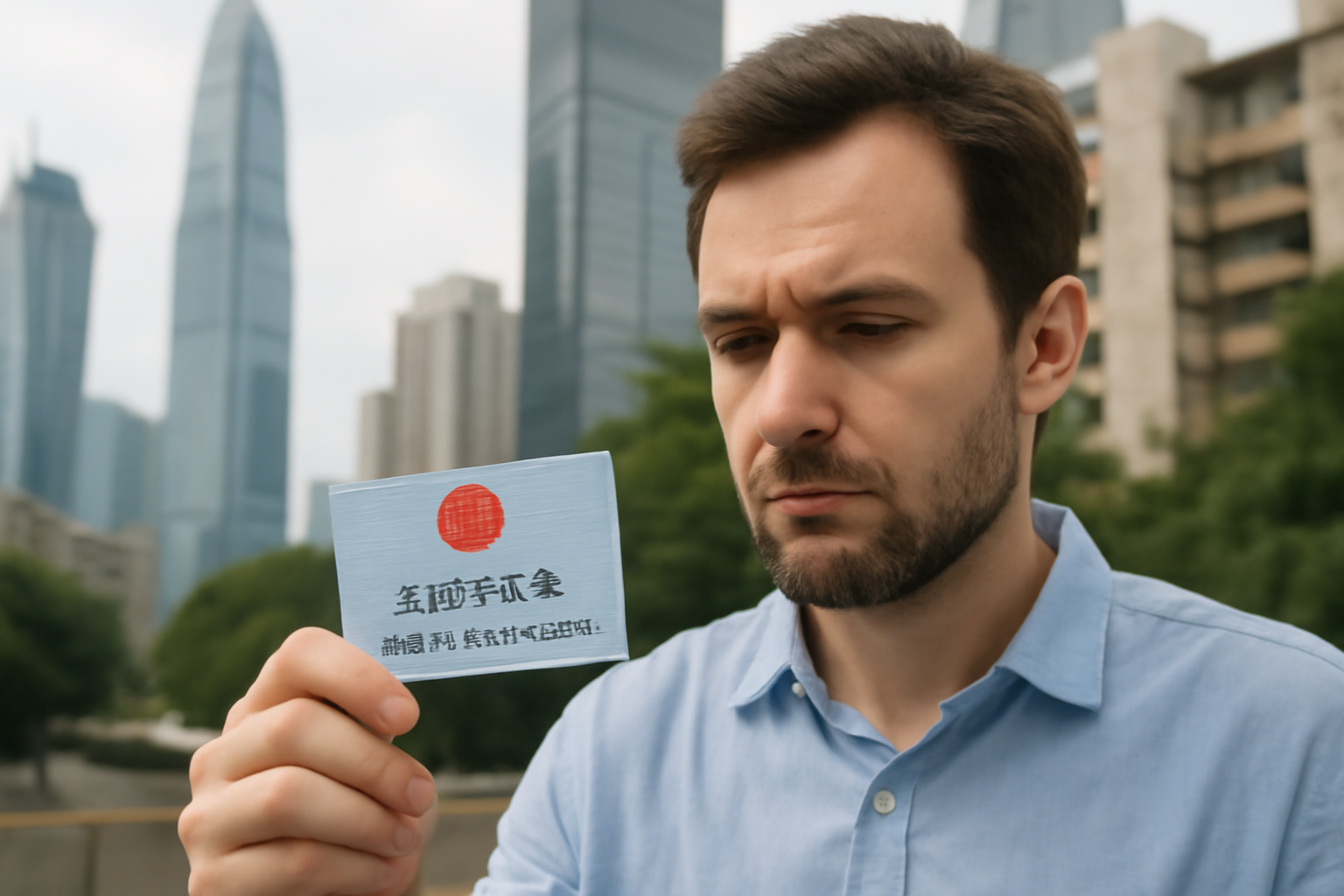
China is a land of opportunities, with a developed economy, stable labor market, and safe living conditions. More and more foreigners wish to stay long-term, and to do so, they need a residence permit – Permanent Residency (PR) in China.
This document allows the holder to live and work in the country, confirming their legal stay and granting access to healthcare, banks, and housing rentals.
What is Permanent Residency in China?
Permanent residency (居留许可, jūliú xǔkě) is an official permit to reside in the PRC. It is issued by the Public Security Bureau (PSB), which is the government agency responsible for immigration and foreign nationals' residence permits.
The PR is pasted into the passport, replacing a visa. As long as the permit is valid, there is no need to apply for a new visa.
The validity period depends on the reason for the stay in China, such as study, work, family, or business. It typically ranges from six months to five years. Once the term expires, the document can be extended.
Who Can Get Permanent Residency?
Foreigners who legally enter China and can confirm the purpose of their stay can apply for PR. Each type of PR has specific conditions, and authorities carefully check the documents. The key rule is that the actual reason for residence must match the visa category.
- Work: This is the most common route. China actively accepts specialists in IT, education, medicine, engineering, and technology. A contract with a Chinese company, a work permit, and registration with government authorities are required. The higher the qualification and salary, the easier it is to obtain PR. The work permit is typically issued for one year, after which it is extended along with the residence permit.
- Study: A study PR is for students in accredited universities, colleges, and language centers. The university issues an invitation, and upon arrival, the student undergoes a medical examination and applies for a temporary PR. This status allows them to live in campus housing, use student benefits, and extend the permit per semester.
- Family: A PR can be obtained if a spouse, child, or parent resides in China. Documents confirming the family relationship, such as a marriage certificate or birth certificate, must be provided, translated, and notarized. This PR is typically issued for one year, with extensions available. Many families live in China for years, renewing their permits without issues.
- Investment: This route is chosen by entrepreneurs. PR is granted to those who have invested substantial funds into the Chinese economy or opened their own company. The investment amount depends on the region, ranging from 500,000 to several million yuan. The entrepreneur must prove the legality of the capital and the company's real business activity. This status provides additional benefits and simplified access to extensions.
- Permanent Residency: The so-called “green card” of China is rare but achievable. It is granted to foreigners who have lived in the country for at least five years, with a stable income, tax payments, and no legal violations. This status is also available to spouses of Chinese citizens and specialists who have contributed to the economy or science. Permanent PR in China grants almost all the rights of a citizen, except for the right to vote.
Important! Chinese authorities strictly monitor compliance with the visa type and the purpose of stay. If you come to study, working without permission is prohibited. If you come for family reasons, don’t start a business in someone else’s name. Violating these conditions can lead to permit cancellation and a ban on re-entry.
How to Apply for Permanent Residency
The process is straightforward but requires attention to detail.
First, you must enter China with the appropriate visa. Then, you must register your address within 24 hours of arrival, which is mandatory for all foreigners.
Afterward, you can begin gathering the necessary documents:
Required documents:
- Passport with a valid visa;
- Completed PSB form;
- Two 33×48 mm photos;
- Medical certificate;
- Proof of purpose – contract, university certificate, family relationship documents;
- Registration of address.
The documents are submitted to the local PSB. Processing time is usually 7-15 working days.
Fee: From 400 to 800 yuan, higher in some cities.
Important! Without registration of the address, the application will not be accepted. The verification is thorough, including address and document validity checks.
How Long Does It Take to Process?
Preparing documents and submitting the application usually takes 2-3 weeks. In major cities like Beijing, Shanghai, and Guangzhou, the process is quicker. In regional areas, it may take longer.
The overall processing time is from 25 to 35 days from the start of document preparation.
For extensions, the application must be submitted at least 30 days before the expiration date.
If you change jobs, universities, or marital status, a new permit must be applied for. The old permit automatically becomes invalid.
Important! You cannot remain in China with an expired PR. Even a one-day delay is considered a violation of visa rules.
Extension and Replacement
Extension is a standard procedure. The key is not to miss the submission deadline.
- Contact the PSB in advance.
- Submit a copy of the old permit and proof of purpose.
- Wait for the notification of readiness.
If everything is in order, a new permit will be issued within 10 days.
In cases of a change in purpose, such as a change of address, job, or study, the process is similar, but a new set of documents will be required.
Important! Extensions do not exempt you from the annual registration. Every foreigner must confirm their residential address regularly.
Reasons for Denial
In some cases, PR in China may not be granted. The most common reasons include:
- Incomplete document package;
- Translation errors;
- Previous visa violations;
- Providing false information;
- Mismatch between the purpose and visa category.
If denied, you can reapply. The key is to fix the mistakes and clarify the requirements.
Important! Reapplying without correcting the reasons for the denial almost always results in the same outcome.
Advantages of Permanent Residency
Obtaining permanent residency in China gives the foreigner numerous benefits:
- Legal residence and work;
- Ability to open a bank account;
- Medical insurance registration;
- Access to education and housing rental;
- Simplified entry and exit without a visa;
- Participation in social programs.
For permanent residents, the opportunities are even broader. They can buy real estate, run a business, and enjoy various benefits.
Important! PR is not just a document but a step toward long-term integration into Chinese life.
Living with Permanent Residency
Once you obtain PR, you become part of the system. You must follow Chinese laws and regulations.
You’ll need to regularly update your medical certificate, confirm your address, and notify authorities of any changes – such as work, marriage, or relocation.
Many foreigners note that living with PR in China makes it easier to solve everyday issues. You can get a SIM card, set up banking apps, and rent an apartment directly from the landlord.
In major cities, PR holders use the same digital services as locals: payments through WeChat, online applications, and the “Health of China” system.
Important! If you lose your passport or PR, you must immediately contact the PSB. The document will be restored, but only with identity confirmation from the consulate.
Specifics for Russians
Russian citizens apply for PR in China under the same rules as other foreigners. However, all documents must be translated into Chinese and notarized. This particularly applies to marriage and birth certificates.
It’s better to prepare the package in advance, as document verification can take up to a week.
Otherwise, the procedure is identical. China does not differentiate by nationality when issuing PR.
Conclusion
PR in China is an important step toward stable life in the country. The process requires attention to detail, but it is clear and transparent.
The key is to meet deadlines, gather all documents, and prove the purpose of stay. Then obtaining the permit will proceed without issues.
After receiving PR, you can live, study, and work legally and peacefully in China.
Frequently Asked Questions
- How much does it cost to apply?
- The application fee is from 400 to 800 yuan. In some cities, it may be as high as 1,000 yuan.
- Can PR be extended without leaving China?
- Yes, it can. Just submit the application 30 days before the expiration date.
- When is permanent residency granted?
- After 5 years of legal residence, with stable income and tax payments.
- Can you work with a student PR?
- No. For part-time work, you need permission from the university and local authorities.
- What happens if the permit expires?
- A fine, deportation, and possible entry ban for up to 5 years.